Cultural Compass: Navigating Diversity Through Communication – Building Intercultural Understanding Through Youth Work


We As One proudly participated as a partner in the Erasmus+ "Cultural Compass: Navigating Diversity Through Communication" Mobility of Youth Workers project (Project No: 2024-1-ES02-KA153-YOU-000215870), coordinated by KUFF Refugees and Minorities Solidarity Association and implemented in Madrid/Alcobendas, Spain, between 29 October and 5 November 2024. The project brought together youth workers from Spain, Turkey, Poland, Latvia, and Romania to strengthen intercultural communication, promote non-formal education, and improve the professional competencies of those working with young people in diverse communities.
The mobility began by creating an inclusive and welcoming learning environment where participants quickly built trust and meaningful connections through interactive name-learning activities and team-building exercises. These methods encouraged active participation while demonstrating how simple non-formal education techniques can effectively break barriers between individuals from different cultural backgrounds. Participants also explored the Erasmus+ Programme, gaining a deeper understanding of its opportunities, project types, and the value of international cooperation for youth development. Learning about the Youthpass Certificate further highlighted the importance of recognising competences gained through non-formal learning and inspired participants to reflect on their own educational journeys.
Another important aspect of the programme focused on self-assessment and reflection. Through anonymous questionnaires, expectation analyses, and collaborative evaluation activities, participants assessed their existing knowledge, identified their learning needs, and expressed both their expectations and concerns regarding the project. These exercises encouraged openness, critical thinking, and active engagement while helping facilitators adapt the learning process to the participants' needs. At the same time, orientation sessions provided practical information about the programme, learning agreements, and the local environment, allowing everyone to participate confidently and safely throughout the mobility.
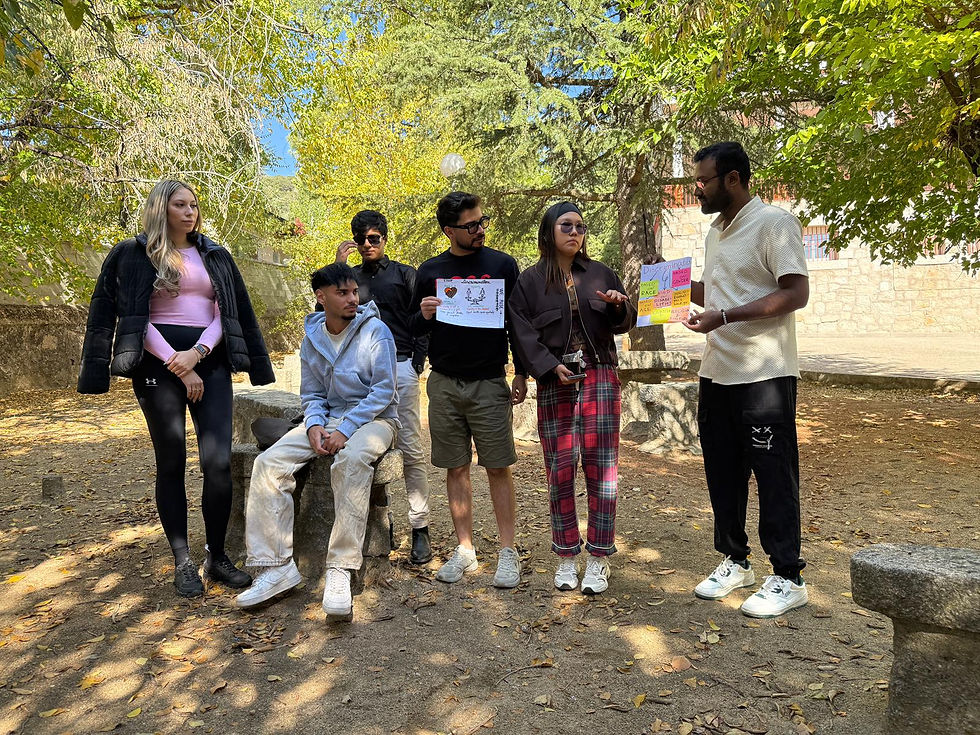
Intercultural dialogue formed the core of the project. Participants introduced their countries through creative visual presentations, discussions, cultural symbols, and artistic expressions, sharing traditions, languages, food, music, history, and everyday customs. By comparing similarities and differences among cultures, they challenged stereotypes, developed empathy, and gained a broader understanding of Europe's cultural diversity. Collaborative group work strengthened communication skills, mutual respect, and appreciation for different perspectives while encouraging participants to become more effective facilitators of intercultural learning in their own communities.
Continuous reflection and feedback played a significant role in reinforcing the learning outcomes. Participants regularly evaluated the quality of activities, group dynamics, and their personal development through structured feedback methods that promoted honest communication and critical analysis. By combining experiential learning, teamwork, visual and auditory learning techniques, and intercultural exchange, the project enhanced participants' confidence, leadership, communication, and facilitation skills. The knowledge and practical methods gained during the mobility will support youth workers in creating more inclusive, culturally sensitive, and engaging learning environments, contributing to stronger international cooperation and greater social inclusion through future Erasmus+ initiatives.